
The online shopping wave in India is nothing really new, but in its scale and speed is new! With millions of consumers now buying everything from groceries to electronics online, warehouses are no longer about merely being big storage sheds at the edge of a city; they are strategic fulfilment centres, tech centres, and last-mile launchpads that determine speed and cost of delivery to customers.
Here, I will explain in simple terms why e-commerce is driving warehouse demand in India, where this demand is growing fastest, the challenges approaching, and what businesses should do to remain ready.
Why e-commerce needs more and smarter warehouses
Online sellers promise expedited delivery and ample product options. To honor their promises, they must hold storage near buying places and quick fulfillment systems. These give rise to three immediate requirements:
In the vicinity: In fulfillment of same-day or next-day delivery, enterprises put smaller fulfillment centers closer to cities and towns rather than owning a large warehouse situated anywhere else.
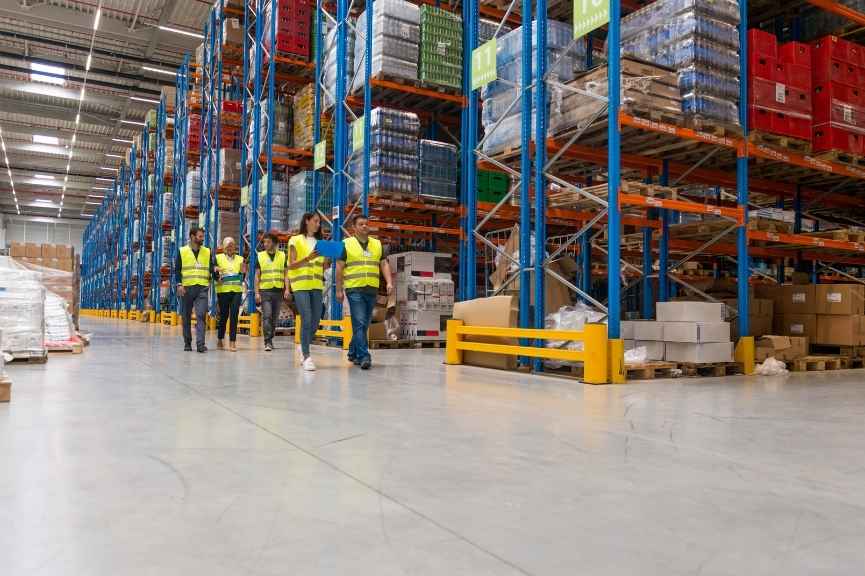
Speed & Tech: E-commerce operations call for automation, real-time inventory systems, and faster order picking, in addition to space. Thus, this heightens the demand for modern, Grade-A warehouses.
Service variety: Warehousing in the present times entails returns, light assembly, temperature-controlled storage (for grocery and pharma), and packaging, besides storage.
Such adjustments have made the Indian e-commerce warehousing market grow rapidly. A recent market report gives the valuation of the market at about USD 8.5 billion in 2024 and predicts a multi-year CAGR that can multiply that given value by the end of the decade.
Tier-2 and Tier-3 cities are taking more space
A major shift in the last few years is the move beyond big metros. Developers and e-commerce players are adding warehousing capacity in smaller cities and district hubs so goods can be staged closer to end customers.
As per the industry reports, in India, the total warehousing stock has crossed the 533 million sq ft mark, with about 100 million sq ft accounted in Tier-2 and Tier-3 cities, which speaks of a decentralised warehousing system in India.
Why does this matter? Having warehouses alongside demand centres reduces last-mile distance-to-delivery, keeping delivery costs in check while also cushioning against fast-delivery promises.
Demand numbers, the market is heating up
The market’s momentum is visible in leasing and investment numbers.
The growth of Grade-A industrial and warehousing leasing peaked in early to mid-2025 with major markets such as Delhi-NCR and Chennai seeing sharp demand. An indicator, one might say, could well be the fact that industrial and warehousing leasing went up some 33% YoY in the first half of 2025, signaling demand from both e-commerce and manufacturing.
Large e-commerce companies are also putting money into strengthening their domestic fulfillment networks directly. For example, Amazon India announced significant capital commitments in 2025 to expand infrastructure and speed up deliveries, moves that push competitors and 3PLs to expand capacity as well.
Policy and infrastructure are helping, but gaps remain
National schemes such as the National Logistics Policy and PM-Gati Shakti have been set up to work on improving road, rail freight, ports, and last-mile connectivity. Better multimodal facilities and dedicated freight corridors enable cost-effective and faster movement of goods between factories, warehouses, and buyers, which in turn encourages warehousing investments across states and regions. These policy initiatives are important because they reduce friction in the whole supply chain.
That said, some challenges persist:
Land & cost: Prime land near large cities is expensive, so developers look to suburbs and smaller cities — but last-mile connectivity must be reliable.
Skilled workforce: Modern warehouses need trained staff for automation, inventory systems, and safety protocols; the talent is still scarce in many regions.
Regulatory & utility issues: Power, water, labour rules, and state-level approvals can slow new projects if not streamlined.
How warehousing is changing (not just growing)
E-commerce is not only increasing the square footage needed; it is changing the kind of warehousing:
Micro-fulfilment centres inside or near cities handle rapid deliveries and curbside pickup.
Cold chain & pharma warehouses expand as grocery and healthcare orders grow.
Flexible/short-term space options (pop-up warehouses) help during festivals and peak seasons.
Automation & robotics for faster picking, packing, and returns handling, critical to keep labour costs and errors down.
Industry studies and market trackers show growing adoption of these formats as e-commerce companies and 3PLs chase speed and lower unit costs.
What this means for businesses and investors
A few practical lessons for any e-commerce brand, retailer, logistics firm, and so on are as follows:
Location focus: Put together a micro-fulfilment or third-party fulfilment facility near your biggest markets rather than one far away.
Planning peaks: Design for flexibility during festival seasons; consider short-term leases or shared space so that it does not go idle.
Technology investment: Real-time inventory, automated picking, or returns management helps reduce errors and speed up deliveries.
Go for collaboration: A 3PL or fulfilment provider with multi-city presence allows you to scale up without going heavy on capital expenditure.
Keep an eye on policy shifts: Sudden attractiveness of a location on account of infrastructure projects and state incentives cannot be understated; build it well into your site selection.
The road ahead is a big, technology-driven market
Long-term growth projections set the stage for robust growth for the sector. The industry analysts foresee the e-commerce warehousing market growing rapidly until the late 2020s as Indian consumption grows, with quick commerce models becoming the norm across more cities, and retailers opting for omnichannel marketing. One of the estimates would rather see the e-commerce warehousing market command several times its size in 2024 by the early 2030s, with growth coming both from space creation and enhanced services, in higher value per square foot.
To state it simply, the combination of an upward online demand curve, policy support, and major private investments has shifted warehousing from a cost centre to a competitive advantage.
E-commerce growth is the single biggest structural pull for warehousing demand in India today. The smart winners will be companies that combine location strategy, operational flexibility, and technology. For investors, the shift to Tier-2/Tier-3 hubs widens opportunity beyond a few congested metros. For brands, partnering with modern 3PLs or building micro-fulfilment near customers can cut delivery times and improve margins.
The message is simple: in India’s booming online economy, warehousing is no longer back-end logistics, it’s front-line customer experience.