


For decades, moving homes and offices has been tied closely to roads and trucks. Highways, container vehicles, and interstate routes have always been the backbone of India’s relocation ecosystem. But 2026 is shaping up to be a turning point. With new cargo airline initiatives, expanding air freight capacity, and policy-level focus on faster logistics, a new question is beginning to surface across the industry:
Could air-based relocation become the next frontier?
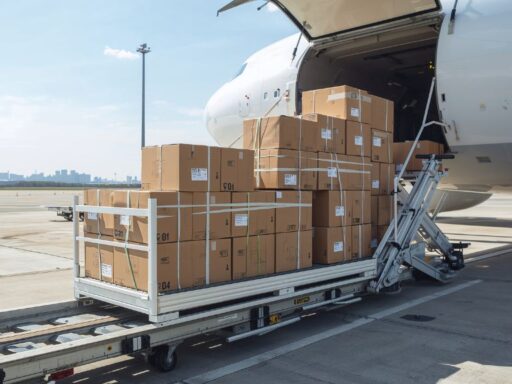
Across India, logistics is quietly evolving. Airports are being developed as cargo hubs, dedicated freight corridors are connecting regions faster, and private cargo airline initiatives are beginning to gain traction. While air transport has always existed for high-value shipments, it is now being looked at from a completely different lens — as a possible future channel for premium, time-sensitive relocation services.
This shift may not replace road transport, but it could redefine what “fast-moving” really means.
Why Air Cargo Is Suddenly in Focus
Traditionally, air freight in India was reserved for very specific use cases — pharmaceuticals, electronics, urgent industrial parts, and international shipments. It was fast, reliable, and safe, but also expensive.
However, several developments are changing the economics and mindset around air logistics:
- Expansion of domestic cargo terminals
- Increased interest in dedicated cargo airlines
- Growing e-commerce demand for faster delivery
- Corporate pressure for quick relocations
- Improved airport infrastructure in non-metro cities
Together, these changes are creating a stronger foundation for domestic air cargo movement.
For the relocation industry, this opens up an entirely new possibility – moving select household or corporate goods via air for faster turnaround.
The Speed Factor: What Air-Based Moving Solves
One of the biggest challenges in relocation is time.
A typical inter-city move by road can take anywhere from two to seven days, depending on distance, route conditions, and coordination. For corporate relocations, urgent job transfers, or emergency moves, this delay can become a real problem.
Air-based cargo changes that equation.
Imagine a scenario where:
- A professional gets a job transfer and needs essentials delivered within 24–48 hours
- A company relocates senior staff on short notice
- Fragile or valuable items need quick, secure transport
Air cargo can make these moves possible in a fraction of the time compared to road transport.
This doesn’t mean moving an entire household via air will become common. But partial, premium, or priority shipments could become a fast-growing segment.
A Premium Segment Waiting to Emerge
Air-based moving will likely begin as a niche service.
It may focus on:
- High-value items
- Essential household goods
- Office equipment
- Electronics and documents
- Urgent corporate relocations
These shipments don’t require full truckloads. They require speed, safety, and reliability.
This naturally positions air relocation as a premium service category.
For movers, this means an opportunity to create differentiated offerings rather than competing only on price.
Corporate Relocations May Lead to a Shift
If air-based moving gains momentum, corporate clients will likely be the first adopters.
Companies today are more time-sensitive than ever. When a senior employee relocates, delays in moving essential items can affect productivity and comfort.
A faster relocation model helps:
- Reduce downtime
- Improve employee experience
- Support quick transitions
- Strengthen mobility programs
In such cases, companies may be willing to pay extra for speed and certainty.
This is where air cargo can become a strategic solution rather than just a logistics alternative.
Smaller Cities Are Joining the Air Network
Another factor supporting this shift is the expansion of regional airports and cargo connectivity.
Earlier, air cargo operations were heavily metro-centric. Today, many Tier-2 and emerging cities are developing cargo handling facilities.
This means faster connections between:
- Metro to non-metro cities
- Industrial towns and commercial hubs
- Remote regions and urban centres
As connectivity improves, air-based relocation becomes more practical for domestic moves.
Challenges That Still Exist
Despite the potential, air-based moving is not without hurdles.
The biggest barrier is cost.
Air freight is still significantly more expensive than road transport. This makes it unsuitable for large-volume household shifts.
Other challenges include:
- Weight and size restrictions
- Special packaging requirements
- Coordination between airport logistics and local transport
- Limited availability for certain routes
Because of this, air relocation is unlikely to replace traditional trucking anytime soon.
But it doesn’t have to.
It only needs to work for specific use cases to become a strong business segment.
Hybrid Moving Models Could Become the Norm
One practical way forward is a hybrid model.
In this setup:
- Essential items move by air
- Bulk household goods are moved by road
This gives customers the best of both worlds: speed for critical items and cost savings for the rest.
For example:
A family moving to a new city may choose to airlift:
- Clothes and daily essentials
- Important documents
- Electronics
- Work-from-home setup
While furniture and heavy items are followed by a truck.
This kind of flexibility can redefine customer expectations.
What Movers Need to Prepare For
If air-based moving is to grow, relocation companies will need to adapt.
This doesn’t mean buying aircraft or managing airports. Instead, it means building partnerships and processes.
Movers may need to:
- Partner with cargo airline operators
- Learn air cargo documentation processes
- Improve packaging standards for air safety
- Offer premium fast-track services
Even a small step toward offering air-linked relocation can position a company as modern and future-ready.
Safety and Security Advantages
Air cargo also has an advantage in terms of security.
Airport handling processes are structured and monitored. Shipments go through controlled environments, reducing the risk of theft or damage.
For customers moving:
- Jewellery
- Electronics
- Confidential files
Air transport can provide added peace of mind.
This trust factor could become a strong selling point for premium relocation services.
A New Opportunity for Brand Positioning
In a highly competitive relocation market, standing out is not easy.
Many companies offer similar services – packing, transport, unloading, and storage.
Air-based moving introduces a new dimension.
Companies that offer:
- Express relocation services
- 48-hour delivery guarantees
- Priority cargo handling
can position themselves as high-end service providers rather than just transport vendors.
This can attract corporate clients and premium customers who value time more than cost.
Will It Become Mainstream?
The big question remains: Will air-based relocation become a common practice?
The answer is likely somewhere in between.
It may not replace trucks. It may not become the default option. But it could grow steadily as a premium segment.
Just like express courier services once felt expensive and rare, but are now normal, air-linked relocation may gradually find its place.
As infrastructure improves and competition increases, costs may become more manageable over time.
The Road Ahead
The logistics sector in 2026 is evolving faster than ever. New cargo airline initiatives are not just about faster parcel delivery. They are part of a larger shift toward speed, efficiency, and flexibility in goods movement.
For the relocation industry, this is an early signal.
Air-based moving may still be in its early stages, but the idea is no longer unrealistic. With the right partnerships, packaging standards, and service planning, movers can explore a new category that focuses on speed, safety, and premium customer experience.
Those who start learning and adapting now will be better prepared when demand begins to rise.
Because the future of moving may not just be about roads and highways anymore.
It may also be about runways.