

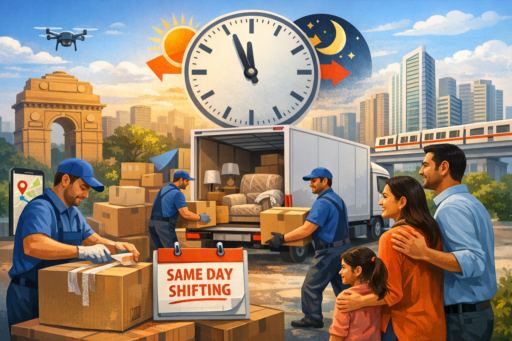
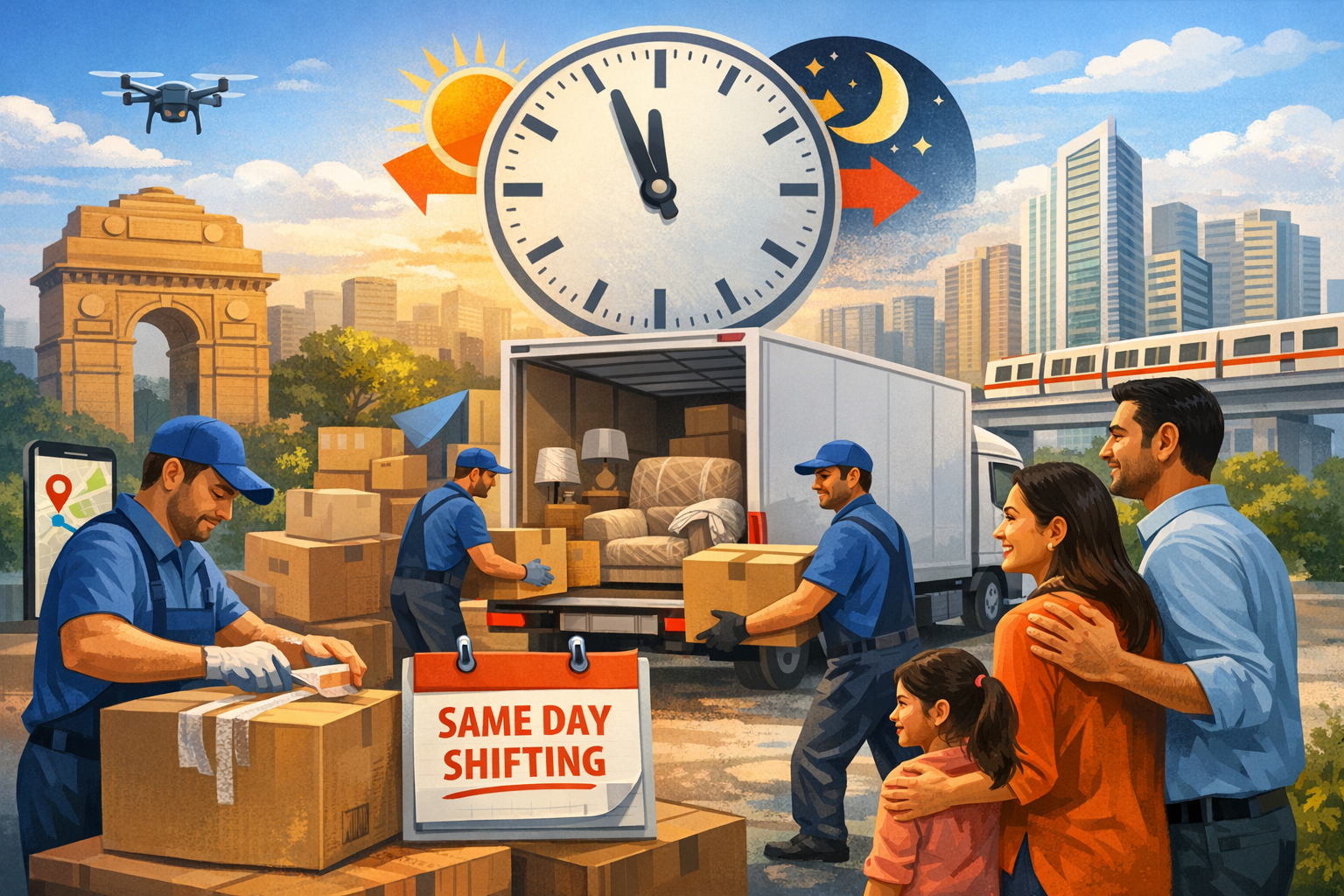
For decades, home and office relocation in India followed a familiar pattern-multiple site visits, days of packing, slow transportation, and delivery schedules stretched over a week or more. But in 2025, expectations are changing fast. As Indians grow used to 10-minute grocery deliveries and same-day e-commerce shipments, a new question is being asked across metros: can relocation also become instant?
The idea of same-day or 24-hour shifting-where households or offices move within a single day, sounds ambitious, even unrealistic. Yet, industry signals suggest this concept is no longer theoretical. It is slowly emerging as a premium urban service, driven by technology, lifestyle shifts, and new-age logistics models.
The real question is not if instant relocation will exist, but how far it can realistically scale in Indian cities.
What “Instant Relocation” Really Means in India
In the Indian context, same-day or 24-hour shifting does not mean moving a fully furnished 3BHK across states overnight. Instead, it refers to compressed, hyper-efficient relocation cycles, typically within the same city or nearby urban clusters.
These moves often involve:
- 1BHK or studio apartments
- Partial household shifting
- Office desk or IT equipment moves
- Storage-to-home or home-to-storage transfers
The promise is simple: pack, move, and deliver within hours-without compromising safety or accountability.
Why Demand for Faster Shifting Is Rising
Urban India is changing how people live and work. Hybrid jobs, short-term rentals, co-living spaces, and startup offices have reduced emotional attachment to long-term housing. Moves are more frequent and less ceremonial.
In Bengaluru, for example, tech professionals often shift homes within the same micro-market—Whitefield to Sarjapur, or HSR to Bellandur-based, purely on commute time. In Mumbai, rising rents push tenants to relocate quickly between suburbs, sometimes with just a weekend’s notice.
At the same time, corporate HR teams are under pressure to relocate employees faster, especially for project-based roles. Delays in movement now mean productivity loss, not just inconvenience.
City Reality Check: Where Same-Day Shifting Is Already Possible
Bengaluru
Bengaluru is currently the most conducive city for same-day shifting. The wide adoption of digital inventory systems, experienced labor pools, and startup-driven demand have created conditions for ultra-fast local moves. Short-distance relocations under 15 km are already being completed within 10–12 hours.
Delhi-NCR
In Gurgaon and Noida, same-day shifting is possible for gated societies and high-rise apartments where lift access and permissions are streamlined. However, traffic unpredictability and inter-city toll delays make daily trips from Delhi to Noida or Faridabad risky.
Mumbai
Mumbai faces the toughest constraints. Narrow lanes, parking shortages, societal permissions, and traffic bottlenecks limit true instant relocation. That said, partial moves within suburbs like Andheri, Powai, or Navi Mumbai are seeing growing demand for 24-hour delivery.
Hyderabad & Pune
These cities offer strong potential due to planned layouts, emerging IT corridors, and lower congestion. Industry players report increasing success with next-day and same-day relocations, especially for young professionals.
The Operational Barriers No One Talks About
Despite rising demand, instant relocation faces serious challenges.
Labour availability remains unpredictable, especially during festivals or peak rental seasons. Society rules restrict movement timings. Lift bookings, vehicle entry permissions, and security checks add friction that technology alone cannot solve.
Then there is the issue of quality control. Speed increases the risk of damage, misplacement, or inventory mismatch. Unlike courier shipments, relocation involves emotional, high-value personal belongings.
This is why most traditional movers remain cautious. Instant relocation is not just a logistics problem-it is a trust and execution challenge.
How Technology Is Making Faster Moves Possible
Technology is the biggest enabler of compressed relocation timelines.
Route optimisation tools now help vehicles avoid congestion in real time. Digital inventory systems reduce manual errors and speed up packing decisions. App-based scheduling allows crews to be deployed dynamically based on distance and load size.
Micro-warehousing is also emerging as a game-changer. In cities like Gurgaon and Bengaluru, movers are experimenting with small storage hubs that allow belongings to be staged overnight before final delivery- making 24-hour relocation far more feasible.

Is the Customer Willing to Pay More?
Yes-but selectively.
Same-day shifting is clearly emerging as a premium service, not a mass offering. Customers relocating for jobs, families facing emergency moves, and startups shifting offices value time over cost.
Industry estimates suggest customers are willing to pay 20–40% more for guaranteed same-day or 24-hour delivery, provided safety and insurance coverage are assured.
This creates an attractive niche for organised movers who can deliver consistency.
What This Means for Movers & Packers
For relocation companies, instant shifting is not about replacing traditional services. It is about adding a high-margin, high-trust layer to their portfolio.
Movers who succeed in this space typically:
- Operate city-level fleets instead of long-haul trucks
- Train specialised rapid-response crews
- Use standardised packing kits
- Offer transparent pricing and digital tracking
Smaller movers may struggle alone, but collaborations with logistics startups, storage providers, and housing platforms can bridge capability gaps.
A Wake-Up Call for Startups & Investors
From an investor’s lens, instant relocation sits at the intersection of urban mobility, logistics tech, and real estate services. It aligns with India’s broader shift toward convenience-driven consumption.
Startups focusing on:
- App-based booking
- Micro-fulfilment storage
- Corporate relocation automation
- Fleet optimisation software
We are well-positioned to ride this trend.
However, scalability will depend on execution discipline, not marketing. This is not a blitz-scaling game-it is a trust-led services business.
Will 24-Hour Relocation Go Mainstream?
The honest answer: not fully, but partially, and profitably.
Instant relocation will remain limited to:
- Urban metros
- Short-distance moves
- Organised players
But within that niche, it can become a defining differentiator.
As Indian cities modernise, society processes digitise, and infrastructure improves, the idea of waiting a week to shift homes may feel increasingly outdated.
The Road Ahead
Same-day and 24-hour shifting is not a fantasy anymore. It is an emerging reality-carefully shaped by technology, consumer expectations, and operational discipline.
For movers, this is an opportunity to evolve. For startups, it is a space to innovate responsibly. And for customers, it signals a future where relocation is less stressful, less time-consuming, and far more predictable.
Instant relocation may not become the norm-but it will certainly become the benchmark for excellence.