
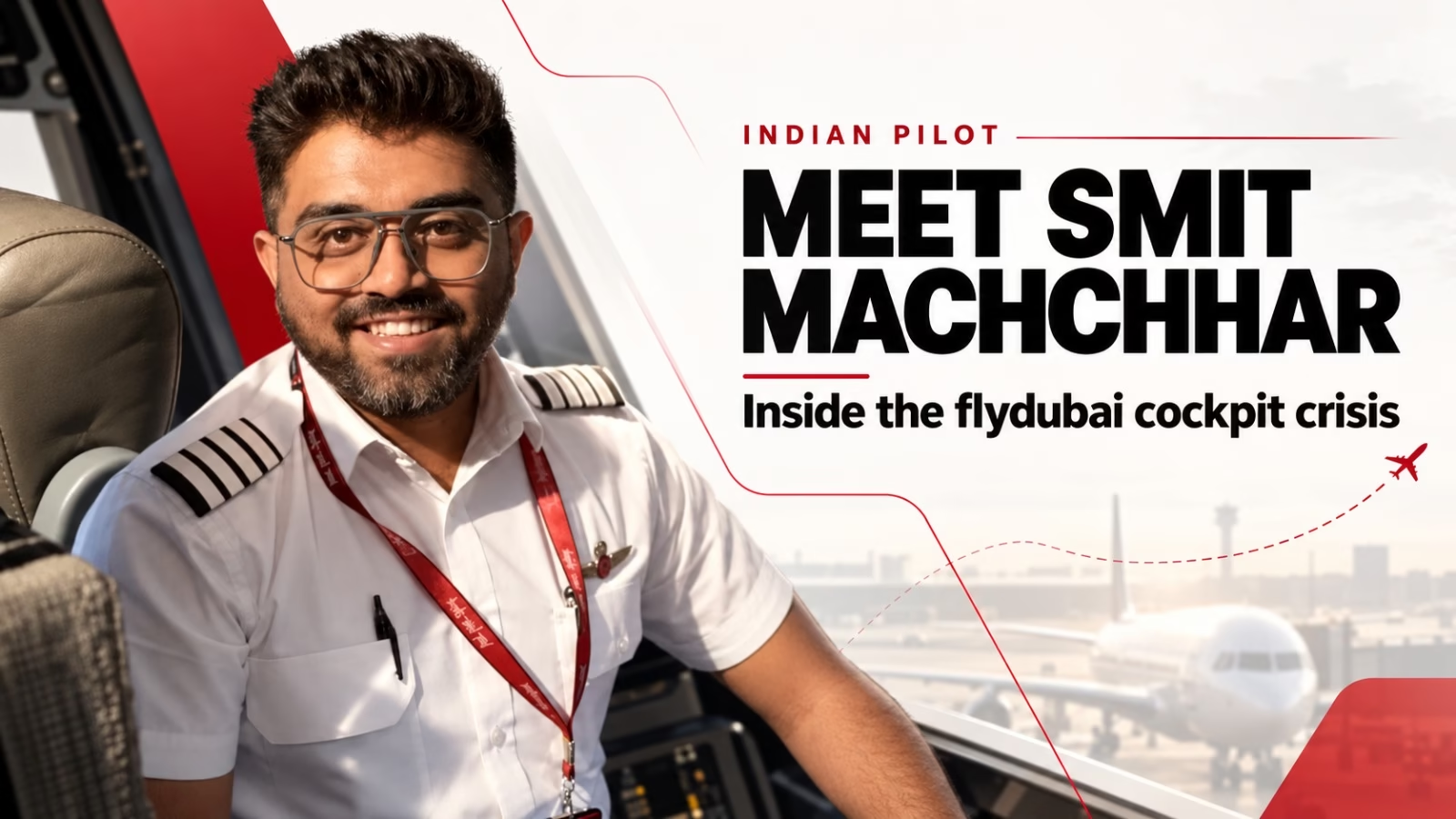
DUBAI, UAE: The actions of Indian pilot Captain Smit Machchhar during a violent cockpit attack aboard Flydubai Flight FZ1073 have drawn attention well beyond the aviation industry, with professionals across the international transport, logistics and mobility sectors pointing to the incident as a stark reminder of the importance of leadership, training and decision-making during a crisis.Logistics
Machchhar, the captain of the Dubai-Tel Aviv flight, suffered serious injuries after his co-pilot allegedly attacked him inside the cockpit on Wednesday. The Boeing 737 MAX 8 subsequently lost thousands of feet in a rapid descent before passengers, cabin crew and other pilots helped regain control of the aircraft.
The flight eventually landed safely in Tabuk, Saudi Arabia, with all 174 people aboard surviving the incident. Machchhar remains under medical care in Saudi Arabia and has been reported in stable condition.
A Pilot’s Actions Become a Global Transport Story
The incident has resonated particularly strongly within an industry whose operations depend on people making critical decisions under pressure.
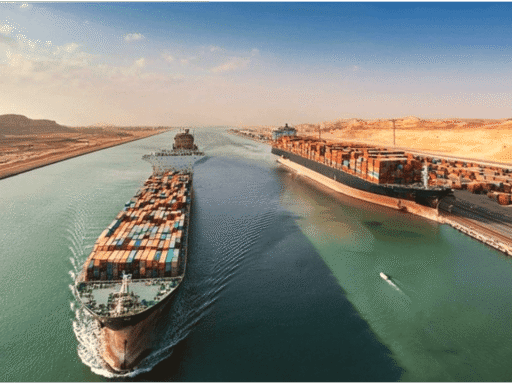
International moving companies, freight forwarders, logistics operators and relocation specialists routinely manage complex journeys involving aircraft, ships, trucks, warehouses and multiple border crossings. While the nature of their operations differs from commercial aviation, the underlying requirement remains similar: maintain control, protect people and assets, and keep operations moving when unexpected events occur.
Captain Machchhar’s actions have therefore attracted attention from professionals who see his response as an example of operational responsibility under extreme circumstances.
The significance extends beyond the fact that he was flying an aircraft. The incident placed one individual at the centre of a rapidly escalating emergency involving passengers, crew, aircraft control and international airspace.
Former Employer SpiceJet Expresses Pride
One of the strongest industry responses has come from SpiceJet, where Machchhar worked for more than a decade before joining Flydubai in 2022.
SpiceJet publicly praised its former captain following the incident. Chairman and Managing Director Ajay Singh said he was proud of Machchhar’s actions and emphasised that a pilot’s responsibility centres on protecting the lives entrusted to him.
SpiceJet’s response carries particular significance within India’s aviation and transportation community because Machchhar spent a substantial part of his professional career with the airline, progressing through the ranks and working as a line-training captain.
The airline said his actions reflected courage and selflessness and expressed its wishes for his recovery.
Logistics Industry Sees a Lesson in Crisis Leadership
For the international logistics industry, the incident highlights a principle that applies across transport modes: technology and infrastructure can support an operation, but people remain responsible for responding when systems face an unexpected crisis.
A logistics manager coordinating an international shipment may have to respond to a border closure, aircraft disruption, port congestion, security incident or sudden route change. A relocation company may have to reorganise the movement of a family’s belongings when a flight, vessel or road corridor becomes unavailable.
The response requires the same broad operational disciplines:
- Clear decision-making under pressure
- Strong emergency procedures
- Trained personnel
- Communication between teams
- Protection of passengers, customers and cargo
- Rapid adjustment of routes and schedules
- Continuity planning across international networks
The FZ1073 incident has brought those principles into sharp focus.
Global Mobility Depends on People
The international moving and relocation industry operates through a highly interconnected network.
Companies such as DHL, DSV, Kuehne+Nagel, DB Schenker, SIRVA, Santa Fe Relocation and Allied operate within global transportation and mobility ecosystems that connect customers across countries and continents.
Their operations depend on airlines, shipping lines, road carriers, customs authorities, warehouses, airports and local service partners. A disruption at any point can affect an entire movement.
The Captain Machchhar incident illustrates the human dimension behind those networks.
Every international movement ultimately depends on professionals making decisions at critical points, whether that person is a pilot, ship captain, truck driver, warehouse manager, freight controller, relocation consultant or operations head.
Indian Professionals at the Centre of Global Mobility
Machchhar’s career also reflects the growing presence of Indian professionals across international transportation.
He spent more than 11 years with SpiceJet before joining Flydubai and has accumulated thousands of hours flying Boeing 737 aircraft, according to reports citing his professional profile. Reuters reported that he has nearly 9,750 hours of Boeing 737 flying experience.
His professional journey has attracted attention from former colleagues and instructors.
Philip Kean, chief executive of New Zealand’s Mainland Air, where Machchhar trained, described him as a strong student and natural leader, according to international media reports.
Former colleagues have similarly described Machchhar as disciplined, calm and supportive of younger pilots.
Those descriptions have gained greater significance following the cockpit incident.
His Own Words on Safety Gain New Meaning
An interview Machchhar gave before the incident has also resurfaced.
In a 2025 interview, he spoke about the importance of prioritising passenger safety during medical emergencies, technical problems and flight diversions.
He explained that delays mattered less to him than ensuring passengers could safely leave the aircraft.
He also spoke about the importance of crew cooperation when something goes wrong in the air. His earlier comments have attracted renewed attention because the FZ1073 emergency ultimately required coordinated action from the captain, cabin crew, passengers and off-duty pilots travelling on the aircraft.
Passengers and Other Professionals Also Played a Role
Investigations and passenger accounts indicate that Machchhar was not the only person who responded during the emergency.
Passengers entered the cockpit after the door opened and helped restrain the attacker. A dentist travelling on the flight provided medical assistance, while off-duty pilots aboard the aircraft helped stabilise the aircraft and guide it towards Saudi Arabia.
The Indian Express reported that the successful outcome resulted from a combination of Machchhar’s actions, passenger intervention, the presence of relief pilots and favourable circumstances during the aircraft’s recovery.
That collective response has become another important element of the incident for the wider transport industry.
A Moment That Connects Aviation With Logistics
The FZ1073 incident did not involve a cargo aircraft or a logistics operation, but its implications reach across the global mobility sector.
International transportation depends on a chain of people, procedures and infrastructure working together. When one part of that chain faces an unexpected crisis, the ability of trained professionals to respond can determine the outcome.
For the moving, relocation and logistics industry, Captain Smit Machchhar’s story has therefore become more than an aviation headline.
It has become a powerful example of professional responsibility under extraordinary pressure.
The investigation into the cockpit attack continues, and authorities have yet to establish the complete motive and sequence of events. But the immediate outcome remains clear: Flight FZ1073 reached safety, all 174 people aboard survived, and an injured Indian captain played a central role in preventing a potentially catastrophic outcome.
Across the global mobility industry, that combination of training, composure, responsibility and courage has given Captain Smit Machchhar’s story significance far beyond the cockpit.