
The logistics and relocation industry has always been deeply human-driven. From coordinating packers and drivers to handling last-minute changes, moving services rely heavily on real-time decision-making and communication.
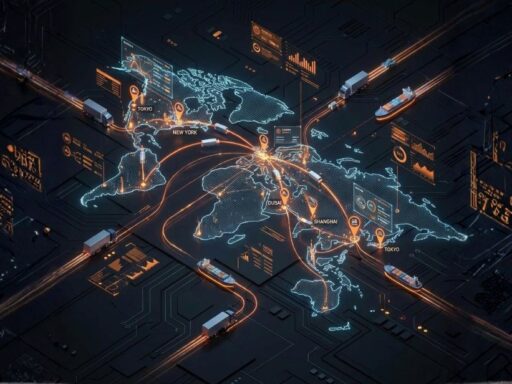
But that is changing. Artificial Intelligence is steadily entering the space, bringing automation, predictive analytics, and real-time tracking into operations. Today, AI can optimize routes, predict delays, and even automate dispatch coordination, tasks that once required constant human intervention.
The question now is no longer whether AI will impact moving services. It already has. The real question is, can it fully replace human coordination?
What AI Is Already Doing Better Than Humans
In many ways, AI is proving to be a powerful upgrade to traditional logistics operations.
AI systems can process massive amounts of data in seconds. They can analyze traffic patterns, weather conditions, and delivery schedules to suggest the most efficient routes. They also improve tracking accuracy and customer communication by providing real-time updates.
In fact, AI-driven logistics solutions have shown measurable improvements, including faster dispatch coordination and reduced shipment errors.
This level of precision and speed is difficult for human teams to match consistently, especially in large-scale operations.
For moving companies handling multiple relocations across cities, AI can significantly reduce chaos behind the scenes.
The Coordination Gap: Where AI Still Falls Short
Despite its capabilities, AI has clear limitations, especially in a field as unpredictable as relocation services.
Moving is not just about transporting goods from one point to another. It involves:
- Handling emotional customers
- Managing unexpected delays
- Coordinating between multiple teams in real time
- Solving problems that were never planned
AI works best in structured environments with predictable patterns. But moving services are anything but predictable.
Even industry experts acknowledge that while AI can automate processes and improve decision-making, human judgment remains essential, especially in complex or unexpected situations.
A delayed truck, a last-minute address change, or a dispute with a customer cannot always be resolved through algorithms alone.
Real Operations: Why Human Intervention Still Matters
On the ground, logistics is messy.
A single relocation can involve multiple variables, traffic delays, labor availability, weather disruptions, and customer-specific requirements. These are not always data-driven problems; they are situational challenges.
AI can flag issues, but resolving them often requires:
- Negotiation
- Empathy
- Experience-based decision-making
In real-world operations, AI tends to act more like an assistant than a replacement.
Even in advanced logistics systems, human oversight is still necessary to interpret insights and make final decisions.
This is especially true in India, where infrastructure gaps and operational variability make logistics even more complex.
The Illusion of Full Automation
There is a growing perception that AI will eventually automate the entire logistics process. But industry trends suggest otherwise.
While AI is excellent at handling repetitive tasks, such as documentation, scheduling, and tracking, it struggles with exceptions and edge cases.
In fact, many logistics companies have found that AI delivers the most value when applied to specific, well-defined tasks rather than entire operations.
The idea of a fully autonomous moving service, where AI replaces human coordinators entirely, remains more theoretical than practical, at least for now.
A More Realistic Future: Human + AI Collaboration
Instead of replacing humans, AI is reshaping their roles.
In the future of moving services:
- AI will handle repetitive coordination tasks
- Humans will focus on decision-making and customer interaction
- Operations will become faster, smarter, and more transparent
This hybrid model is already emerging across the logistics sector. AI reduces the “noise” of daily operations, allowing human teams to focus on what truly matters: problem-solving and relationship management.
Companies that successfully integrate AI into their workflows are likely to gain a competitive advantage, not because they replace people, but because they empower them.
The Indian Context: Why Full Replacement Is Even Harder
In India, the case for human coordination is even stronger.
The relocation industry here is highly fragmented, with varying service standards, inconsistent infrastructure, and region-specific challenges. AI systems depend heavily on clean, structured data, something that is still evolving in many parts of the Indian logistics ecosystem.
Without reliable data and standardized processes, AI cannot function at its full potential.
This makes human experience and on-ground coordination even more critical.
Replacement or Reinvention?
So, can AI replace human coordination in moving services?
The honest answer is, not entirely.
AI is transforming the industry, making operations more efficient, predictive, and data-driven. It is eliminating repetitive work and reducing errors. But when it comes to handling uncertainty, building trust, and managing real-world complexities, humans remain irreplaceable.
The future of moving services is not about choosing between AI and humans. It is about combining both.
Because in an industry where no two moves are ever the same, coordination is not just about systems—it’s about understanding people.